
If you are injured in a Thanksgiving car accident in Florida, legal responsibility usually depends on which driver or other party acted negligently and caused your injuries. Multiple parties may share fault. Florida uses a modified comparative negligence rule for most negligence cases, and personal injury protection (PIP) benefits may help with certain medical bills and lost income regardless of who caused the crash. Your ability to pursue additional compensation depends on your injuries, applicable law, available coverage, and evidence.
For drivers and families traveling through Tampa, Lutz, Wesley Chapel, Hillsborough County, and nearby Florida communities, the most useful early steps are to obtain necessary medical care, report the crash when required, preserve evidence, and review the applicable insurance policies.
Why Do Thanksgiving Car Accidents Happen in Florida?
Holiday travel can put more vehicles on major routes such as Interstate 75 and Interstate 275 around the Tampa Bay area. The time of year does not create liability by itself. The conduct that caused the collision matters.
Common contributing factors include:
- Distracted driving while checking directions or using a phone.
- Driver fatigue after extended travel or late-night trips.
- Speeding, tailgating, and sudden lane changes.
- Impaired driving following holiday gatherings.
- Failure to adjust speed or following distance to traffic and weather.
Who Is at Fault for a Thanksgiving Car Accident?
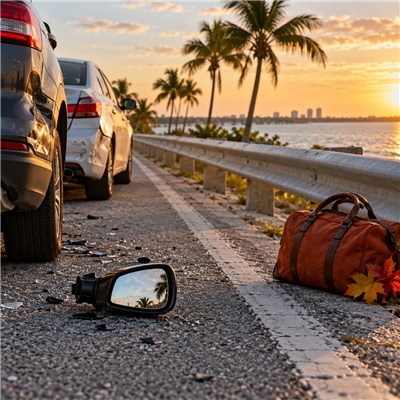
In a typical Florida negligence claim, you must show that a party owed a duty of reasonable care, breached that duty, caused your injuries, and left you with legally recoverable damages. Police reports, vehicle damage, photographs, dash camera footage, witness accounts, and medical records may help establish what happened.
For example, if another motorist looks at a navigation app instead of traffic ahead and crashes into your stopped vehicle, that distraction may support a claim against the motorist. Responsibility still depends on the complete evidence, including the actions of other drivers.
Can Two Drivers Share Fault Under Florida Law?
Yes. Florida Statute § 768.81 generally reduces damages in proportion to an injured claimant’s assigned fault. In negligence actions governed by the statute, a claimant found more than 50% at fault for their own harm generally cannot recover damages. Statutory exceptions apply, including the exception for certain medical negligence claims.
If recoverable damages are $100,000 and you are found 20% at fault, the comparative-fault calculation would reduce the damages to $80,000 before considering other applicable legal and insurance issues. At 51% fault, the statutory bar generally prevents recovery in a covered negligence action.
Key point: Shared responsibility can change the amount of compensation. A careful review of the evidence is especially valuable when fault is disputed.
Florida Statute § 768.81, comparative fault (official full URL)
Can Other Parties Be Responsible for the Collision?
Yes. Depending on the evidence, potentially responsible parties may include:
- A commercial driver and, when the legal requirements are met, an employer responsible for job-related driving.
- A vehicle owner under applicable Florida ownership and entrustment rules, including relevant statutory limitations.
- A manufacturer or other responsible party when a vehicle defect contributes to the injuries.
- A roadway contractor or government entity when negligent work or a dangerous condition legally supports a claim. Government claims have special procedures and limits.
Commercial vehicle collisions may also require driver records, maintenance information, dispatch records, and additional insurance review.
Read about Florida truck accident liability.
How Does Florida No-Fault Insurance Work After a Holiday Crash?
Florida’s PIP system generally provides specified first-party benefits without requiring you to establish which driver caused the accident. Subject to policy terms and statutory requirements, standard PIP benefits typically involve:
- $10,000 in required PIP coverage for qualifying policies.
- Up to 80% of reasonable, medically necessary covered medical expenses.
- Up to 60% of qualifying lost income or earning capacity.
- Initial services and care within 14 days of the crash for medical-benefit eligibility.
The full $10,000 medical benefit is not automatic. A qualifying emergency medical condition determination affects the available medical-benefit limit. PIP also does not automatically cover all medical costs, vehicle damage, or pain and suffering.
PIP coverage and bodily injury liability are different questions. You may be able to pursue compensation from a negligent party when applicable legal requirements are satisfied.
Florida Statute § 627.736, PIP benefits (official full URL)
What Compensation May Be Available After a Thanksgiving Crash?
The categories of damages depend on the facts, available coverage, and legal rules. A qualifying claim may involve:
- Medical costs: emergency treatment, rehabilitation, medication, and supported future care.
- Lost earnings: documented missed work and possible reduced earning capacity.
- Property damage: vehicle repairs or replacement and other legally supported losses.
- Pain and suffering: qualifying noneconomic damages when the applicable motor vehicle injury threshold is met.
Under Florida Statute § 627.737, the right to certain noneconomic damages in covered motor vehicle cases generally requires a qualifying injury such as a significant and permanent loss of an important bodily function, permanent injury within a reasonable degree of medical probability, significant and permanent scarring or disfigurement, or death.
Florida Statute § 627.737, motor vehicle tort threshold (official full URL)
What Should You Do After a Thanksgiving Car Accident?
- Check for injuries and seek emergency assistance when necessary. Move out of immediate danger when you can do so safely.
- Notify law enforcement when Florida law requires immediate reporting. Under § 316.065, covered crashes include those involving injury, death, or apparent vehicle or property damage of at least $2,000.
- Photograph the vehicles, road conditions, traffic controls, and visible injuries when it is safe to do so.
- Exchange identifying, vehicle, and insurance information and collect witness contact details.
- Obtain appropriate medical evaluation and keep records of treatment, expenses, and missed work.
- Notify your insurer as your policy requires. Provide accurate facts and avoid speculating about fault or accepting a final settlement before understanding your losses.
Florida Statute § 316.065, crash reporting (official full URL)
Read about mistakes to avoid after a Florida car accident.
What If the At-Fault Driver Is Visiting From Another State?
You may still have a Florida injury claim when a visitor causes a collision in Florida. A driver’s state of residence does not eliminate potential liability. The applicable insurance policy, coverage limits, vehicle ownership, and jurisdiction can create additional questions.
An investigation may need to identify the out-of-state insurer, determine available liability and uninsured or underinsured motorist coverage, and decide where a lawsuit may properly be filed.
How Long Do You Have to File a Florida Car Accident Lawsuit?
Florida Statute § 95.11 generally gives you two years to file a negligence lawsuit for a car accident occurring under the current law, usually measured from the date the claim accrues. Different rules or exceptions may apply depending on the claim, relevant dates, and defendants. Claims involving government bodies and wrongful death require particular care.
Insurance notification and PIP treatment deadlines can arise sooner. Preserve records and review the specific deadlines rather than assuming every claim follows the same timetable.
Florida Statute § 95.11, limitations of actions (official full URL)
Frequently Asked Questions About Thanksgiving Car Accident Liability
Is the Rear Driver Always Responsible for a Rear-End Crash?
No. A rear-end collision may create a rebuttable presumption of negligence against the rear driver in certain circumstances. Evidence of unusual or negligent conduct by another driver can change the analysis.
Can You Recover Damages If You Were Partly at Fault?
Potentially. In most cases governed by Florida’s modified comparative negligence rule, recovery is proportionately reduced when your share of fault is 50% or less. A finding of more than 50% fault generally bars recovery under that provision.
What Happens If the Other Driver Has No Insurance?
Available benefits may include applicable PIP, uninsured motorist coverage if carried and applicable, or claims against other legally responsible parties. The specific policy language and accident facts determine your options.
Will You Need to Go to Court?
Not necessarily. Some claims resolve through insurance negotiations. Litigation may be necessary if the parties disagree about fault, injuries, or reasonable compensation.
Speak With a Florida Car Accident Attorney About Your Thanksgiving Crash
If your holiday trip ended in an accident, you can get guidance on the insurance process, disputed liability, medical expenses, and possible compensation. Serrano Law serves clients in Tampa, Lutz, Wesley Chapel, Hillsborough County, Pasco County, and nearby Florida areas. The firm emphasizes direct attorney attention and representation tailored to the facts of your case.
Contact Serrano Law to request a consultation and discuss your circumstances.
Disclaimer: This article provides general information, not legal advice. An attorney can assess how the law applies to your circumstances.