
Rideshare accidents near Tampa attractions often involve overlapping insurance coverage and multiple potentially responsible parties. Liability may fall on the rideshare driver, another motorist, or Uber and Lyft insurance policies depending on the driver’s status at the time of the crash. These cases can become complicated quickly because different coverage rules apply at different stages of the trip, especially in busy areas like downtown Tampa, Ybor City, and the Riverwalk. Serrano Law assists injured individuals in understanding how these claims work and pursuing full financial recovery.





Understanding rideshare accidents near Tampa attractions 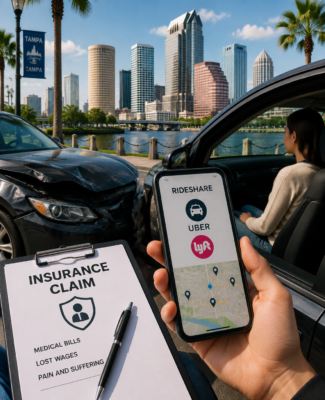
Serrano Law represents individuals injured in collisions involving rideshare vehicles throughout Tampa and Hillsborough County. These incidents frequently occur near major attractions such as Amalie Arena, Busch Gardens, the Tampa Riverwalk, Water Street, and entertainment districts where rideshare pickups and drop-offs are constant.
Unlike standard vehicle collisions, rideshare accidents introduce additional layers of insurance coverage and corporate involvement. A single crash may involve the rideshare driver’s personal policy, another driver’s insurance, and the rideshare company’s commercial policy. The challenge is determining which policy applies based on the exact moment the crash occurred and what the driver was doing at that time.
These cases require careful analysis because liability is rarely straightforward. Even when fault seems clear, insurance coverage rules can change the outcome significantly.
Why liability becomes complicated in rideshare collisions
Determining who pays after a rideshare crash depends on several factors that are not present in typical auto accidents. One of the most important is the driver’s activity status within the app.
If the driver is not logged into the app, their personal insurance usually applies. If the app is on and the driver is waiting for a ride request, limited coverage may apply. If the driver has accepted a ride or is transporting a passenger, commercial coverage from the rideshare company may be triggered.
Another complicating factor is the involvement of additional vehicles. In busy Tampa attraction zones, multiple drivers, pedestrians, and cyclists may be involved, each introducing separate insurance policies and potential liability disputes.
Founding Attorney Attorney
Michael Serrano

Molli Gard, ESQ.
Insurance coverage structure in rideshare accidents
Rideshare companies like Uber and Lyft structure insurance coverage in tiers. Understanding these tiers is essential for identifying who may pay for injuries.
When the app is off
If the driver is not working at the time of the crash, their personal auto insurance is typically the only available coverage. In this scenario, the rideshare company is generally not responsible.
When the app is on and waiting for requests
Limited liability coverage may apply if the driver is available for rides but has not yet accepted a passenger. This coverage may include bodily injury protection, but limits are often lower than commercial policies.
When a ride is accepted or a passenger is present
The highest level of coverage is triggered when the driver is actively transporting a passenger or en route to pick someone up. This commercial insurance can include significant liability coverage for injured parties.
Understanding these stages is critical when pursuing compensation, as insurance companies often dispute which phase applies.
Accidents near Tampa attractions and high-traffic zones
Tampa’s entertainment and waterfront districts create conditions where rideshare accidents are more likely. Areas near concerts, sporting events, and nightlife venues often experience congestion, sudden stops, and unpredictable pedestrian movement.
For example, rideshare vehicles frequently stop in active traffic lanes near Amalie Arena or along Channelside Drive. These sudden stops can lead to rear-end collisions or pedestrian impacts. In Ybor City, narrow streets and heavy nightlife traffic increase the risk of driver error and limited visibility.
In waterfront areas like the Tampa Riverwalk, pedestrians and cyclists may interact closely with rideshare vehicles, increasing the likelihood of complex injury scenarios involving multiple parties.
Mike Serrano’s law office was everything I needed after a very traumatic accident. He was always super up front and honest with me. I never got the feeling he was trying to sell me on something or to do something that I wasn’t comfortable with. He listened to my concerns and when it tough moments came that I needed to stand my ground. He backed me and made me feel 100% secure. He got me exactly what I needed in a settlement and I would never consider using anyone else. His office staff is also phenomenal.” - Mary Mike Serrano was a great attorney for my case!! He was very flexible with phone calls/ Zoom meetings. His staff are always friendly, whether it be on the phone or emails. They keep you updated during your entire case! They don’t leave you silent for months. if you call, they always call back with updates! Highly recommend!" - Kylie Collier Border I’ve never had to deal with a lawyer before but Mike has set the bar HIGH. He was always available to communicate my concerns and explain each step of the way. I know no other lawyer would have been able to achieve the same results because he jumped on an opportunity that was a little out of the ordinary and it paid off. He really fought for my case and over delivered. I really hope I never have another accident but if I do I’m running to Mike for help." - Sandy Carter
Injuries that often result from rideshare crashes
Injuries in these types of collisions can vary widely depending on speed, impact angle, and whether pedestrians or passengers are involved. Common injuries include:
Whiplash and soft tissue injuries
Even low-speed crashes can cause significant neck and back strain that may require ongoing treatment.
Head and brain injuries
Concussions and traumatic brain injuries may occur when passengers strike windows or interior structures.
Spinal injuries
Damage to the spine can result in long-term pain, mobility issues, or surgical needs.
Broken bones
Collisions involving pedestrians or high-impact crashes may result in fractures requiring extensive recovery time.
Emotional and psychological harm
Anxiety, sleep disruption, and emotional distress are also common after serious rideshare accidents.
Choosing The Right Personal Injury Attorney Personal Injury Settlement TimelineRelated Videos
Compensation available after a rideshare accident
Individuals injured in rideshare collisions near Tampa attractions may be entitled to compensation for several categories of loss.
Medical expenses
This includes emergency care, hospitalization, rehabilitation, and future medical needs.
Lost income
If injuries prevent return to work, lost wages and reduced earning capacity may be recoverable.
Pain and suffering
Physical pain and emotional distress may be considered when calculating damages.
Property damage
Damage to personal belongings, including phones or vehicles, may also be included.
Because multiple insurance policies may apply, identifying all available coverage is essential for maximizing recovery.
Steps to take after a rideshare accident
Taking the right steps after a crash can significantly impact the outcome of a claim.
Seek medical attention immediately
Even if injuries seem minor, documentation from a medical professional is important.
Report the accident
Law enforcement should document the crash, especially in busy Tampa areas.
Preserve rideshare information
Screenshots of the ride status, driver details, and app activity can help establish liability.
Collect evidence
Photos of the scene, vehicle damage, and surrounding conditions can be valuable.
Avoid early insurance statements
Insurance companies may attempt to minimize payouts before all facts are known.
Why rideshare claims require detailed investigation
Rideshare accidents often require a deeper level of investigation than standard collisions. App data, driver logs, GPS records, and company policies may all be necessary to determine liability.
In some cases, insurance companies dispute whether the driver was actively working at the time of the crash. This can significantly impact available coverage and delay compensation.
For individuals already dealing with medical recovery, these disputes can create additional stress and financial pressure.
How Serrano Law supports injured individuals
Serrano Law works with individuals injured in rideshare accidents throughout Tampa and Hillsborough County. The firm focuses on identifying all responsible parties, reviewing insurance coverage layers, and building strong claims supported by evidence.
Each case is approached with attention to detail, especially when multiple insurers are involved or when liability is disputed. The goal is to ensure injured individuals are not left navigating complex insurance systems alone.
Rideshare accidents near Tampa attractions often involve multiple layers of insurance coverage and complicated liability questions. Determining who pays depends on driver status, app activity, and the specific circumstances of the crash. Understanding how these factors interact is essential for protecting financial recovery after an injury.
Speak With a Trusted Florida Personal Injury Attorney Today
If you or a loved one has been injured in a rideshare accident near Tampa attractions, Serrano Law can evaluate your situation, identify available coverage, and pursue compensation for your losses.
This content is for informational purposes only and does not constitute legal advice. Consult an attorney regarding your specific situation.