
At Serrano Law, we understand how quickly a routine drive can turn into a serious collision during Florida’s rainy season. Sudden storms, reduced visibility, and slick pavement create conditions where even cautious drivers may lose control or misjudge distance. When injuries follow, the strength of your case often depends on the quality and timing of the evidence collected after the crash. What you gather in those early moments can shape how fault is evaluated, how insurance companies respond, and how fully your losses are recognized.






Florida rainy season driving requires constant adjustment, yet many drivers fail to slow down or increase following distance when storms arrive. This combination of weather conditions and driver behavior leads to preventable collisions across Hillsborough County and throughout the state. Understanding what evidence matters most gives injured individuals a clearer path toward protecting their rights and documenting what truly happened on the road.
Why Florida Rainy Season Drives High Accident Risk 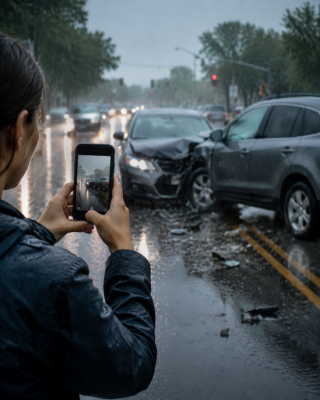
Florida’s rainy season brings frequent, fast-moving storms that drastically change road conditions in a short amount of time. Roads that appear safe can quickly become hazardous as water accumulates, tires lose traction, and visibility drops. Hydroplaning becomes more likely, especially on highways where vehicles travel at higher speeds. Even experienced drivers can struggle to maintain control when sudden rainfall reduces the ability to see brake lights, traffic signals, and lane markings.
Driver behavior also plays a major role. Speeding during wet conditions, following too closely, and failing to adjust headlights can all increase the likelihood of a crash. In many cases, the combination of weather and negligence creates a situation where determining responsibility requires a careful review of the facts rather than assumptions about the rain itself.
Founding Attorney Attorney
Michael Serrano

Molli Gard, ESQ.
How Weather Conditions Affect Liability Analysis
Insurance companies often attempt to shift blame toward weather rather than driver decisions. While rain is a contributing factor, it rarely eliminates responsibility. The key question is whether each driver acted reasonably under the conditions present at the time. That includes adjusting speed, maintaining safe distance, and responding appropriately to reduced visibility.
Evidence becomes essential in separating unavoidable weather challenges from preventable driver errors. Without it, claims may rely heavily on conflicting statements, which can weaken the outcome of your case.
What Evidence Matters Most After A Rainy Season Crash
Strong evidence builds a clear picture of the collision, helping demonstrate how the crash occurred and who may be responsible. The most effective claims typically rely on multiple forms of documentation that work together rather than a single source of proof.
Photographs from the scene, witness accounts, official reports, medical records, and vehicle data all contribute to a more complete understanding of the event. The sooner this information is collected, the more reliable it tends to be.
Mike Serrano’s law office was everything I needed after a very traumatic accident. He was always super up front and honest with me. I never got the feeling he was trying to sell me on something or to do something that I wasn’t comfortable with. He listened to my concerns and when it tough moments came that I needed to stand my ground. He backed me and made me feel 100% secure. He got me exactly what I needed in a settlement and I would never consider using anyone else. His office staff is also phenomenal.” - Mary Mike Serrano was a great attorney for my case!! He was very flexible with phone calls/ Zoom meetings. His staff are always friendly, whether it be on the phone or emails. They keep you updated during your entire case! They don’t leave you silent for months. if you call, they always call back with updates! Highly recommend!" - Kylie Collier Border I’ve never had to deal with a lawyer before but Mike has set the bar HIGH. He was always available to communicate my concerns and explain each step of the way. I know no other lawyer would have been able to achieve the same results because he jumped on an opportunity that was a little out of the ordinary and it paid off. He really fought for my case and over delivered. I really hope I never have another accident but if I do I’m running to Mike for help." - Sandy Carter
Photos, Video, And Immediate Scene Documentation
Visual documentation is often one of the most powerful forms of evidence after a crash in wet conditions. Photos taken immediately after impact can capture road conditions before traffic or cleanup efforts alter the scene.
Important visual evidence includes vehicle positioning, damage patterns, skid marks, standing water, and traffic control devices such as lights or signs. Weather conditions at the time should also be documented, including rainfall intensity and visibility limitations. When available, dashcam footage can provide a continuous record of the moments leading up to the collision, offering clarity that still images alone cannot always provide.
Witness Statements And Independent Accounts
Neutral witnesses can play a significant role in confirming how a crash occurred. Drivers involved in the collision may have different recollections of speed, distance, or signaling, especially under stressful conditions. Independent observers can help clarify these details.
Collecting names, contact information, and brief statements from witnesses at the scene helps preserve their accounts while memories are still fresh. These statements often become especially important when insurance companies dispute liability.
Choosing The Right Personal Injury Attorney Personal Injury Settlement TimelineRelated Videos
Police Reports And Official Records
Law enforcement reports provide structured documentation of the crash. Officers typically record environmental conditions, driver statements, and any visible violations of traffic laws. While these reports are not always final determinations of fault, they carry significant weight during insurance evaluations and legal review.
Details such as time of crash, location, road conditions, and preliminary assessments can support other forms of evidence and help establish consistency in your claim.
Medical Documentation And Injury Linkage
Medical records are essential in connecting the crash to your injuries. Even when symptoms are not immediately severe, injuries such as soft tissue damage, concussions, or spinal trauma may develop over time. Seeking prompt medical attention creates a documented timeline that supports both your health and your claim.
Emergency room records, diagnostic imaging, treatment notes, and follow-up care all help demonstrate the extent of harm suffered. Consistency in treatment also helps strengthen the overall reliability of your case.
Vehicle Data And Accident Reconstruction
Modern vehicles often contain electronic systems that record key information about driving behavior before a crash. This data can include speed, braking activity, and steering input, which may help reconstruct the sequence of events.
When combined with physical evidence from the scene, vehicle data can help clarify disputes about how the collision occurred, especially in multi-vehicle crashes common during heavy rainfall.
Weather Reports And Roadway Conditions
Official weather data can confirm rainfall intensity, timing, and visibility conditions at the moment of impact. This information helps establish whether conditions were severe enough to affect driving behavior and whether drivers should have adjusted accordingly.
Road maintenance records or traffic camera footage may also provide additional context, especially in areas prone to flooding or drainage issues.
Common Mistakes That Can Weaken A Claim
After a crash, certain actions can unintentionally harm a case. Delaying medical treatment, failing to document the scene, or providing incomplete statements to insurance adjusters can create gaps in evidence. Repairing vehicles before documentation is complete can also remove valuable physical evidence.
Avoiding these missteps helps preserve the full picture of what occurred and supports a stronger evaluation of damages.
How Insurance Companies Evaluate Rain-Related Crashes
Insurance companies often analyze whether drivers acted reasonably given the conditions. They may review speed, braking distance, visibility, and road conditions to determine liability. In many cases, insurers look for ways to assign partial fault to reduce compensation.
Clear and organized evidence reduces ambiguity and limits the ability to dispute key facts. The stronger the documentation, the more difficult it becomes to undervalue a claim.
Serrano Law focuses on building injury claims supported by detailed evidence and consistent documentation. This includes reviewing crash reports, gathering witness statements, analyzing medical records, and identifying additional sources of proof such as vehicle data and weather records. The goal is to present a clear and accurate account of how the crash occurred and the impact it has had on the injured person’s life.
More information about related legal support can be found here:
https://mikeserranolaw.com/2020/10/02/florida-car-accident-guide/
https://mikeserranolaw.com/2020/10/02/florida-slip-and-fall-accident-guide/
https://mikeserranolaw.com/2020/10/02/florida-personal-injury-guide/
https://mikeserranolaw.com/2020/10/02/florida-motorcycle-accident-guide/
https://mikeserranolaw.com/blog/
Taking action early helps preserve critical evidence that may otherwise be lost or altered over time.
DISCLAIMER
This content is for informational purposes only and does not constitute legal advice. Consult an attorney regarding your specific situation.