
Yes. Traffic camera footage can sometimes help prove a Florida accident claim by showing vehicle movement, lane position, traffic conditions, timing, and events before or after a collision. The value of the footage depends on what the camera captured, whether a recording exists, whether it was preserved, and whether the video clearly relates to a disputed issue.
If you were injured in Hillsborough County or another Florida community, identifying possible video sources quickly can matter. Some systems overwrite recordings after a short period, while some traffic camera systems do not record or store video at all. Serrano Law can help investigate potential evidence sources and evaluate available steps for preserving relevant footage.






Why Traffic Camera Footage Can Matter After a Florida Crash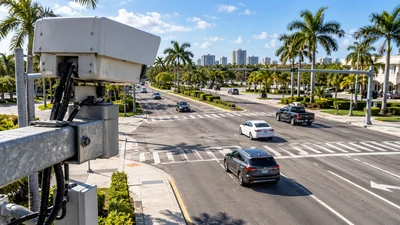
After a car accident, drivers and witnesses may give different accounts of the same event. One driver may say the traffic signal was green. Another may claim a vehicle failed to yield, crossed a lane line, or entered an intersection too quickly.
Video may provide an independent record of what happened.
Traffic camera or surveillance footage may help document:
- Vehicle movement before the crash
- Which lanes the vehicles occupied
- Whether a vehicle turned or changed lanes
- The sequence and timing of events
- Traffic conditions around the collision
- The location and direction of impact
- Pedestrian, bicycle, or motorcycle movement
- Conduct immediately before or after the crash
A recording does not automatically establish legal responsibility. A camera may show only part of an intersection, provide a limited angle, lack audio, or miss the moment of impact. When relevant footage exists, it can help attorneys, insurers, witnesses, and accident reconstruction professionals compare accounts with objective visual evidence.
For more information about responsibility after a collision, visit:
https://mikeserranolaw.com/liability-in-a-car-accident-case/

Michael Serrano
Founding Attorney

Molli Gard, ESQ.
Attorney
What Types of Cameras May Capture a Florida Accident?
The term “traffic camera” can describe several types of cameras. The distinction matters because not every camera records or stores footage.
Government Traffic Monitoring Cameras
State and local transportation agencies use roadside cameras to monitor traffic conditions, congestion, incidents, and roadway operations.
In Florida, FDOT uses thousands of live traffic camera feeds through FL511. FL511 states that its traffic camera video and images are not stored or recorded. This means that seeing an FDOT or FL511 camera near a crash does not necessarily mean archived footage exists.
Other state, county, city, toll-road, or transportation systems may operate different equipment or follow different procedures. The camera owner, purpose, field of view, and recording practices should be identified before assuming footage is available.
Intersection and Red-Light Cameras
Some intersections may have cameras associated with traffic enforcement, signal operations, or traffic monitoring. A visible camera does not necessarily mean continuous video of every collision is stored.
Before relying on an intersection camera, it is necessary to identify who controls it, what it records, whether recordings are retained, and whether the camera was pointed toward the relevant area at the time of the crash.
Private Security Cameras
Businesses, shopping centers, apartment complexes, parking lots, gas stations, homes, and other properties may have security cameras facing nearby roads.
In some Florida accident claims, private surveillance footage may provide a closer view than a roadway monitoring camera. A business camera might show a vehicle entering an intersection, changing lanes, leaving a parking lot, or moving immediately before impact.

Mike Serrano’s law office was everything I needed after a very traumatic accident. He was always super up front and honest with me. I never got the feeling he was trying to sell me on something or to do something that I wasn’t comfortable with. He listened to my concerns and when it tough moments came that I needed to stand my ground. He backed me and made me feel 100% secure. He got me exactly what I needed in a settlement and I would never consider using anyone else. His office staff is also phenomenal.”
- Mary
Mike Serrano was a great attorney for my case!! He was very flexible with phone calls/ Zoom meetings. His staff are always friendly, whether it be on the phone or emails. They keep you updated during your entire case! They don’t leave you silent for months. if you call, they always call back with updates! Highly recommend!"
- Kylie Collier Border
I’ve never had to deal with a lawyer before but Mike has set the bar HIGH. He was always available to communicate my concerns and explain each step of the way. I know no other lawyer would have been able to achieve the same results because he jumped on an opportunity that was a little out of the ordinary and it paid off. He really fought for my case and over delivered. I really hope I never have another accident but if I do I’m running to Mike for help."
- Sandy Carter
Dash Cameras
A driver, rideshare operator, commercial vehicle, witness, or nearby motorist may have a dash camera that captured the collision.
Dash camera footage may show lane movement, braking, sudden turns, surrounding traffic, weather conditions, or the actions of vehicles immediately before impact.
Doorbell and Residential Cameras
Doorbell and residential security cameras may capture crashes on neighborhood streets or record vehicles approaching or leaving the area.
A useful evidence search may include nearby homes and businesses rather than only cameras mounted over the roadway.
Key Point: Video evidence can disappear quickly, and some government traffic feeds do not record at all. Identifying the camera owner and preservation options early can help determine whether usable footage exists.
Traffic Camera Footage Can Help Resolve Disputes About Fault
Florida accident claims often involve disagreements about how a crash occurred. Video can become especially useful when driver statements conflict and independent witnesses are limited.
Consider an intersection collision in Hillsborough County. One driver says the other vehicle entered the intersection after the light changed. The second driver says the signal allowed the movement.
A recording might show the vehicles, the traffic signal, or surrounding traffic patterns. Even when the signal itself is not visible, the movement of other vehicles may help establish timing or context.
Lane-change crashes can create similar disputes. After a sideswipe collision, each driver may claim the other crossed the lane line. Footage from a business, dash camera, residential camera, or other source may help show which vehicle moved before impact.
For more information about Florida car accident claims, visit:
https://mikeserranolaw.com/2020/10/02/florida-car-accident-guide/
Related Videos
Choosing The Right Personal Injury Attorney
Personal Injury Settlement Timeline
Florida Comparative Fault Makes Evidence About Each Driver Relevant
Florida uses a modified comparative fault system for negligence claims. Under Florida Statutes section 768.81, damages are generally reduced in proportion to a claimant’s percentage of fault. In negligence actions covered by the statute, a party found to be more than 50 percent at fault for that party’s own harm may not recover damages.
This makes evidence about the conduct of each driver especially significant. A recording might show that one driver made an unsafe turn while also showing how another driver approached the intersection or responded to the hazard.
The legal effect of the footage depends on the complete evidence. Insurers and attorneys may compare video with crash reports, photographs, witness accounts, vehicle damage, medical records, roadway evidence, electronic vehicle data, and other available information.
Video should be treated as one part of the investigation rather than a substitute for the complete record.
For information about local representation, visit:
https://mikeserranolaw.com/hillsborough-county-car-accident-lawyers/
Why Traffic Camera Footage Should Be Sought Quickly
Video evidence may not remain available indefinitely.
Private security systems may automatically overwrite older files. A business may keep recordings for a limited period. A witness may delete dash camera footage without realizing that it could relate to a claim. Government systems also vary, and some live traffic systems do not store recordings in the first place.
Useful early steps may include:
- Record the exact crash location, date, and approximate time.
- Identify nearby intersections and traffic-control devices.
- Photograph visible cameras from a safe location.
- Write down nearby businesses, homes, parking areas, and properties with cameras.
- Preserve personal dash camera footage in its original form.
- Ask known witnesses whether they recorded the crash.
- Keep original photographs and videos without editing or compressing them.
- Note the direction each camera appears to face.
Depending on who controls the footage, an attorney may evaluate whether a preservation request, public-records request, subpoena, discovery request, or another lawful method is appropriate.
What If the Camera Did Not Capture the Impact?
A recording does not always need to show the exact moment of impact to have potential value.
A camera may show a vehicle approaching an intersection, entering a lane, turning, stopping, or leaving the crash scene. Video may also document traffic congestion, visibility, road conditions, vehicle location, or the timing of events.
For example, footage that shows a vehicle entering an intersection moments before a collision may help establish a timeline when considered with photographs, witness testimony, vehicle damage, or other evidence.
The usefulness of any recording depends on what it actually shows and how reliably it can be connected to the crash.
Can You Get Traffic Camera Footage Yourself?
Sometimes. The process depends on who owns or controls the recording and whether a recording exists.
Florida public-records law generally provides a right to inspect and copy public records held by government agencies, subject to applicable exemptions. A public-records request cannot produce footage that was never recorded or is no longer retained.
Private businesses and property owners follow different rules. A business may voluntarily preserve or provide footage, but a private owner does not necessarily have to provide a recording simply because someone asks for it.
If a lawsuit is filed, formal discovery procedures may provide methods for seeking relevant evidence from parties or third parties, subject to court rules and applicable objections.
Seeing a camera near the scene is therefore only the starting point. You still need to determine whether it recorded the relevant area, whether the footage exists, and how it may lawfully be obtained.
What Other Evidence Can Support a Florida Accident Claim?
Traffic camera footage may be useful, but most accident claims rely on several forms of evidence.
Other evidence may include:
- Florida traffic crash reports
- Photographs of the vehicles and scene
- Witness statements
- Medical records
- Medical bills
- Repair estimates
- Vehicle electronic data
- Relevant cellphone or application records when lawfully obtainable
- Employment and wage-loss records
- Expert analysis when appropriate
The most useful evidence depends on the issue in dispute. Fault evidence may help explain how the collision occurred. Medical evidence may help document injuries, treatment, and causation. Financial records may help document accident-related losses.
For more information about damages in a car accident case, visit:
https://mikeserranolaw.com/2021/02/01/car-accident-case-damages/
How a Florida Car Accident Lawyer Can Help With Video Evidence
After an injury, you should not have to identify every camera system or evidence-preservation procedure on your own.
Depending on the facts, a Florida car accident lawyer may:
- Investigate the crash location
- Identify nearby public and private cameras
- Contact businesses, property owners, or witnesses
- Determine whether a government system records or retains footage
- Send appropriate preservation requests
- Request available public records
- Use formal discovery procedures when litigation permits
- Review video alongside photographs, crash reports, and witness accounts
- Evaluate whether footage supports or contradicts statements about the crash
The goal is not simply to find a video. The goal is to determine what the evidence shows, whether it is reliable, and how it fits with the rest of the claim.
Speak With Serrano Law About a Florida Accident Claim
If you were injured in a Florida car accident and believe traffic, security, dash camera, doorbell, or other video footage may exist, early investigation may help identify evidence before it disappears.
Serrano Law represents people with serious personal injury claims throughout Florida, including Hillsborough County and nearby areas. The firm can evaluate potential video evidence, insurance issues, fault disputes, and other circumstances affecting a car accident claim.
To request a consultation, call today or visit:
https://mikeserranolaw.com/contact/
This article is for general informational purposes only and is not legal advice. Every case is different. Consult an attorney about your specific circumstances.