
Florida drivers are often unprepared when cold fronts roll in, leading to an increase in accidents. Minor fender benders during these times can quickly escalate into more serious situations. Understanding the risks and taking proper precautions can help you stay safe on the road.






In Florida, fender benders are relatively common due to the state’s high traffic volumes. However, these minor incidents can take a much more dangerous turn when cold front weather hits. Cold fronts, although rare, create hazardous driving conditions that many Florida drivers are simply not equipped to handle. At Serrano Law, we see how these weather conditions lead to serious accidents, even from seemingly minor collisions. Drivers unfamiliar with driving in cooler temperatures may find themselves in situations where their vehicle loses control or they’re unable to stop in time to avoid a more catastrophic crash. But why exactly do these incidents become more serious during cold weather? Let’s dive into the factors that make cold fronts dangerous and how drivers can protect themselves.
How Cold Fronts Impact Florida Driving Conditions 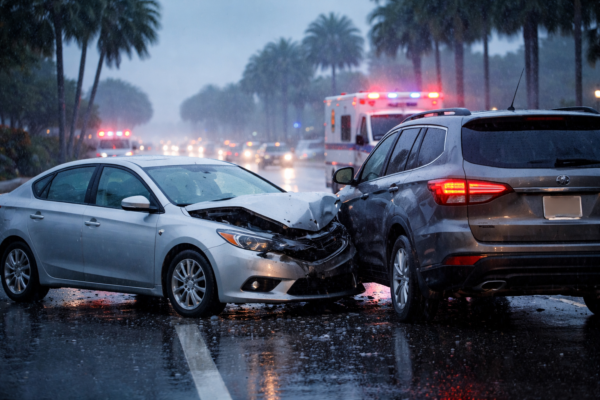
Temperature Drops and Road Conditions
While Florida’s tropical climate usually offers a warm and sunny experience, cold fronts can dramatically change the situation. A cold front, which typically brings a rapid drop in temperature, often leaves roads damp or even wet from rain. This is when the risk of losing traction becomes most prevalent. Road conditions in Florida are generally not designed to handle freezing temperatures, and the pavement is often not treated for cold weather. As a result, the roads become more slippery than drivers are accustomed to, making it easier to lose control of a vehicle, especially during minor accidents like fender benders.
Increased Rainfall and Reduced Visibility
When a cold front hits Florida, it often brings increased rainfall, especially during the early mornings and evenings. This added moisture on the road, combined with the cooler temperatures, makes the surface of the road slippery. Minor collisions that might otherwise be easy to control can lead to sudden skidding or hydroplaning on wet surfaces. In addition to the slick road conditions, reduced visibility from the rain or fog that often accompanies cold fronts makes it harder for drivers to react quickly to sudden stops or traffic changes. This combination increases the chances of a minor accident turning into something more serious.
Founding Attorney Attorney Attorney
Michael Serrano

Candace “Cea” Hartley

Molli Gard, ESQ.
Unprepared Drivers on Slippery Roads
Florida drivers are primarily used to warm, dry roads, and many don’t know how to adjust their driving habits when the weather changes abruptly. Cold front weather, particularly in the winter months, can be shocking to those who are unfamiliar with these conditions. For example, during a typical cold front, many drivers are likely to maintain their normal speed, unaware that the cooler temperatures can lead to slick spots on the roads, particularly bridges, overpasses, or areas that are shaded from the sun. When a driver doesn’t slow down or alter their driving behavior, even minor fender benders can lead to uncontrollable skids and more severe accidents.
Common Accidents That Happen During Cold Front Weather
Hydroplaning and Loss of Traction
One of the main reasons why accidents during cold fronts are more dangerous is the potential for hydroplaning. Hydroplaning occurs when a layer of water builds up between the tire and the road, causing the vehicle to lose traction and slide uncontrollably. Cold fronts bring not only wet roads but often heavier rainfall, making the risk of hydroplaning much higher. Even a light tap of the brakes in these conditions can result in the car sliding uncontrollably, especially if the driver is unfamiliar with the situation. What would normally be a minor accident with minimal damage can quickly turn into a serious collision when the vehicle skids into another lane or loses control completely.
Slower Reflexes and Delayed Responses
Cold weather tends to make people react more slowly, and this is especially true for drivers in Florida who are used to warmer conditions. The sudden temperature change can also cause drivers to feel tense or uneasy, which impacts their ability to make split-second decisions on the road. When a minor accident occurs, the driver’s ability to respond and regain control is crucial. Unfortunately, in cold weather, slower reflexes and delayed reactions make it more difficult to avoid a worse situation. The delay in reaction times can result in more serious impacts or the inability to stop in time to avoid a collision.
Mike Serrano’s law office was everything I needed after a very traumatic accident. He was always super up front and honest with me. I never got the feeling he was trying to sell me on something or to do something that I wasn’t comfortable with. He listened to my concerns and when it tough moments came that I needed to stand my ground. He backed me and made me feel 100% secure. He got me exactly what I needed in a settlement and I would never consider using anyone else. His office staff is also phenomenal.” - Mary Mike Serrano was a great attorney for my case!! He was very flexible with phone calls/ Zoom meetings. His staff are always friendly, whether it be on the phone or emails. They keep you updated during your entire case! They don’t leave you silent for months. if you call, they always call back with updates! Highly recommend!" - Kylie Collier Border I’ve never had to deal with a lawyer before but Mike has set the bar HIGH. He was always available to communicate my concerns and explain each step of the way. I know no other lawyer would have been able to achieve the same results because he jumped on an opportunity that was a little out of the ordinary and it paid off. He really fought for my case and over delivered. I really hope I never have another accident but if I do I’m running to Mike for help." - Sandy Carter
Increased Impact of Minor Collisions
Cold temperatures can stiffen certain vehicle components, like the tires, suspension, and brakes, making them less responsive than usual. This means that even in minor accidents, the vehicle may not react as expected. The combination of stiffened car parts and slick roads leads to a situation where collisions, even small ones, are more likely to cause significant damage. For instance, a light fender bender may push the car off its trajectory into a guardrail or another vehicle, increasing the risk of serious injury or greater property damage. Drivers often don’t anticipate that what starts as a low-speed fender bender can escalate into a much more dangerous situation due to the impact of cold weather on vehicle mechanics.
How to Protect Yourself During Cold Front Weather
Slow Down and Adjust Your Speed
One of the simplest and most effective ways to stay safe during a cold front is by reducing your speed. Even if the roads don’t appear to be icy or slippery, the temperature drop alone can make driving conditions more dangerous. Taking it slow, especially when rain or fog is present, will give you extra time to respond to any sudden changes or hazards on the road. Additionally, driving at a lower speed ensures that even if you lose control, you have less momentum, reducing the severity of the crash.
Choosing The Right Personal Injury Attorney Personal Injury Settlement TimelineRelated Videos
Ensure Your Tires Are Properly Inflated and in Good Condition
Tires are your vehicle’s most crucial component for maintaining control, especially in wet or slick conditions. Cold fronts can cause tire pressure to drop, which reduces their grip on the road and increases the likelihood of losing traction. Be sure to regularly check your tire pressure and ensure your tires have sufficient tread to handle wet roads. Well-maintained tires can help mitigate the risk of hydroplaning and can assist you in regaining control should you encounter slippery roads during a minor accident.
Increase Your Following Distance
When driving in adverse weather conditions, it’s important to increase the distance between your vehicle and the one in front of you. This additional space allows you more time to react if the driver ahead stops suddenly or if road conditions become even more dangerous. Maintaining a safe distance ensures that even if the road is slick or the weather worsens, you have enough room to stop safely and avoid more serious accidents.
Avoid Sudden Maneuvers
One of the most common causes of more serious accidents during minor collisions is a sudden maneuver, such as sharp braking or swerving to avoid hitting another vehicle. In cold front weather, any abrupt change in speed or direction can cause a vehicle to lose traction on the road. If you are involved in a minor collision, it’s best to remain calm, apply the brakes slowly, and try to steer in a controlled manner to avoid further damage or injury.
Stay Informed About Weather Conditions
Before heading out on the road, always check the weather forecast, especially if you know that a cold front is expected. Florida’s weather can change rapidly, and being informed of temperature shifts or the possibility of rain or fog will help you prepare accordingly. Carrying an emergency kit, including items like blankets, a flashlight, and a first-aid kit, can also be helpful if you find yourself stranded in poor weather conditions.
Stay Safe, Stay Prepared
Cold fronts in Florida may not be common, but they certainly pose a danger to drivers, especially when minor accidents like fender benders can quickly turn into more serious situations. Drivers must adjust their habits to account for the change in road conditions and understand the risks associated with colder weather. By slowing down, maintaining proper tire pressure, and being cautious of road conditions, you can greatly reduce the chances of your minor collision turning into something much worse.
At Serrano Law, we understand the challenges of navigating Florida’s unpredictable weather conditions. If you find yourself involved in an accident, don’t hesitate to contact us for a free consultation. Our team is here to guide you through the process and help you recover the compensation you deserve. Stay safe on the roads, and don’t let an unexpected cold front catch you off guard.