
Jet ski accidents are a serious concern for residents and visitors in Florida, especially during May when waterways become crowded with recreational boaters. Serrano Law has decades of experience representing individuals injured in personal watercraft accidents, guiding them through the complex process of pursuing compensation for damages. These accidents often involve high-speed collisions, sudden stops, or improper operation, and they can result in severe injuries ranging from broken bones to traumatic brain injuries. The legal questions that follow are often complex, involving multiple parties, insurance claims, and sometimes product or equipment defects. Understanding who may be liable and the steps to protect your rights is crucial for anyone injured in a jet ski accident.



Common Injuries from Jet Ski Accidents 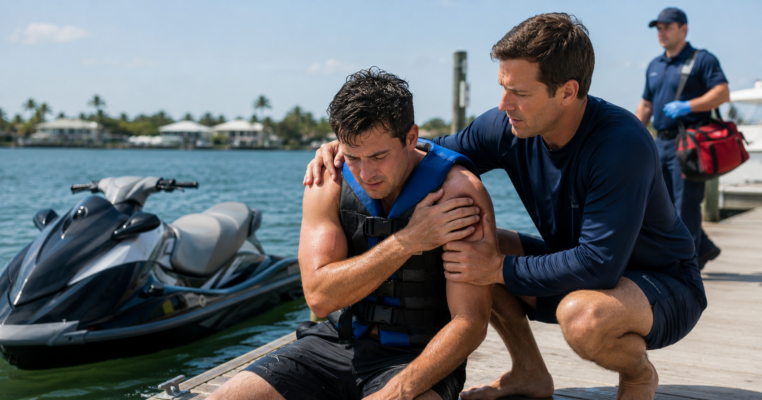
The nature of jet ski operation means that accidents can cause a wide spectrum of injuries, many of which have long-lasting effects. Head injuries, including concussions and more severe traumatic brain injuries, are common when operators fall at high speeds or collide with other vessels or stationary objects. Spinal cord injuries can lead to partial or total paralysis, significantly affecting the victim’s quality of life and ability to work. Fractures of the arms, legs, ribs, and collarbone are frequent, often requiring surgical intervention and months of rehabilitation. Soft tissue injuries, including sprains, strains, and ligament damage, are also typical and can lead to chronic pain if not treated properly. Lacerations and bruising occur from sharp objects in the water or impact with the watercraft itself. Immediate medical attention is essential, not only for health reasons but also to establish documentation for a potential claim.
Determining Liability Under Florida Law
Florida personal injury law is largely based on negligence principles, which require proving four key elements: duty, breach, causation, and damages. Any party who had a duty to act safely and failed to do so may be held responsible if their breach directly caused injuries. Potentially liable parties in a jet ski accident include the operator of the jet ski, rental companies, manufacturers, and even property owners in certain circumstances. For example, a negligent operator who drives recklessly, ignores boating regulations, or operates under the influence may be primarily responsible. Rental companies that fail to maintain equipment properly, provide adequate safety instructions, or screen renters for skill and sobriety could share liability. Manufacturers could be held accountable if a defect in the jet ski or safety equipment contributed to the injury. Property owners may also be partially liable if unsafe conditions, such as unmarked shallow areas or hazardous docks, contributed to the accident. Florida law allows for comparative negligence, which means the victim’s own actions may reduce the total compensation if they are found partly at fault.
Founding Attorney Attorney Attorney
Michael Serrano

Candace “Cea” Hartley

Molli Gard, ESQ.
Operator Negligence and Unsafe Behavior
Many jet ski accidents occur due to operator negligence. Common examples include collisions with other vessels, swimmers, or stationary objects; failing to adhere to speed limits or restricted zones; and operating without the required safety training or boating license. Reckless operation, including wake jumping too close to others, sudden turns, and distracted driving, contributes significantly to accidents. Alcohol or drug use while operating a jet ski dramatically increases risk and often strengthens a personal injury claim if intoxication is involved. In cases of operator negligence, victims can pursue compensation for medical costs, lost wages, rehabilitation, and pain and suffering, but these claims require careful documentation of the circumstances surrounding the accident.
Rental Company Responsibility
Rental companies have a legal duty to provide safe equipment and to ensure renters understand how to operate jet skis safely. Liability can arise if a company rents out defective or poorly maintained jet skis, fails to instruct users on proper operation, or neglects to warn about local hazards. Documentation is critical in these situations. Keeping rental agreements, instruction sheets, and any communication with the company provides evidence to support claims. If a rental company’s negligence contributed to an accident, they may be responsible for covering a portion of damages, including medical expenses and compensation for pain and suffering.
Mike Serrano’s law office was everything I needed after a very traumatic accident. He was always super up front and honest with me. I never got the feeling he was trying to sell me on something or to do something that I wasn’t comfortable with. He listened to my concerns and when it tough moments came that I needed to stand my ground. He backed me and made me feel 100% secure. He got me exactly what I needed in a settlement and I would never consider using anyone else. His office staff is also phenomenal.” - Mary Mike Serrano was a great attorney for my case!! He was very flexible with phone calls/ Zoom meetings. His staff are always friendly, whether it be on the phone or emails. They keep you updated during your entire case! They don’t leave you silent for months. if you call, they always call back with updates! Highly recommend!" - Kylie Collier Border I’ve never had to deal with a lawyer before but Mike has set the bar HIGH. He was always available to communicate my concerns and explain each step of the way. I know no other lawyer would have been able to achieve the same results because he jumped on an opportunity that was a little out of the ordinary and it paid off. He really fought for my case and over delivered. I really hope I never have another accident but if I do I’m running to Mike for help." - Sandy Carter
Product Liability and Defective Equipment
In some jet ski accidents, defective equipment may play a role in causing injury. Product liability claims may involve faulty throttle systems, unstable design, defective braking mechanisms, or malfunctioning safety equipment such as life jackets. Demonstrating that a defect directly contributed to an injury typically requires expert testimony. In these cases, liability can extend beyond operators or rental companies to include manufacturers, distributors, or retailers. Victims should preserve the jet ski involved, if possible, and document the defect through photographs and professional inspections.
Property Owner Liability
Property owners may face liability when unsafe conditions contribute to jet ski accidents. Examples include submerged hazards, poorly marked shallow areas, or docks lacking proper safety measures. If the property owner failed to take reasonable steps to prevent injury or warn about known hazards, they could be partially responsible. This type of liability is often less common but can be significant when severe injury occurs near a fixed structure or private beach.
Choosing The Right Personal Injury Attorney Personal Injury Settlement TimelineRelated Videos
Insurance Considerations in Jet Ski Accidents
Florida law requires vessel owners to carry liability insurance, but coverage specifics can vary. Insurance may cover medical expenses, property damage, and legal costs. Prompt reporting to insurance companies and gathering comprehensive evidence—such as photographs, witness statements, and police or Coast Guard reports—can greatly influence the success of a claim. Victims should avoid making admissions of fault and consult an experienced attorney before communicating with insurers.
Steps to Protect Your Rights
- Seek immediate medical care to document injuries and establish medical records.
- Report the incident to local authorities, such as the police or Coast Guard, and notify the rental company if applicable.
- Collect evidence, including photos of the accident scene, witness statements, and details of the jet ski and other involved equipment.
- Preserve any physical evidence, such as life jackets or damaged equipment.
- Contact a skilled Florida personal injury lawyer, such as Serrano Law, for guidance.
Working with an attorney ensures that all responsible parties are identified, the full scope of economic and non-economic damages is calculated, and negotiations or litigation with insurance companies are handled appropriately. Attorneys can guide victims through filing claims, evaluating settlement offers, and taking cases to trial if necessary.
Maximizing Recovery After a Jet Ski Accident
To maximize recovery, victims should maintain detailed records of medical treatments, lost wages, and out-of-pocket expenses. Expert testimony may be required for more severe injuries or complex liability issues. A Florida personal injury attorney can coordinate with medical experts, accident reconstruction specialists, and insurance adjusters to strengthen the claim. Immediate legal consultation also prevents missed deadlines and statute of limitations issues under Florida law.
Jet ski accidents this May in Florida can lead to serious injuries and complicated liability questions. Understanding the potential parties at fault, preserving evidence, and seeking legal guidance promptly are essential steps for protecting your rights and recovering fair compensation. Serrano Law offers experienced representation for jet ski accident victims, ensuring that all avenues for recovery are explored and pursued efficiently. Acting quickly can make a significant difference in the outcome of a case, securing compensation for medical bills, lost income, and the physical and emotional toll of a serious injury.
This information is for educational purposes and is not legal advice. Consult a licensed attorney about your specific situation.
To learn more about this subject click here: The Risks of Jet Skiing in Florida Waters