
Florida is a prime destination for millions of spring breakers each year, with tourists flocking to its sunny beaches and lively cities. However, along with the influx of visitors comes a significant rise in car accidents. Whether it’s a crash in the crowded streets of Miami, a collision near the theme parks in Orlando, or a fender bender along the coast, tourists unfamiliar with local traffic laws often find themselves involved in accidents. When these accidents occur, the question of liability becomes more complicated. Who is responsible when a tourist is involved in a car crash? At Serrano Law, we understand the complexities of these cases and are here to help you navigate the legal landscape.
As a tourist in Florida, dealing with an accident can be overwhelming. Not only are you in an unfamiliar state, but the legal and insurance issues surrounding a crash may seem daunting. Whether you were behind the wheel of a rental car or driving your own vehicle, several parties may be involved when determining who is liable for the accident. In Florida, liability can be divided among the driver, the rental company, other drivers, and even the state, depending on the circumstances of the crash. Understanding who is responsible is crucial to ensuring you receive the compensation you deserve who is responsible.






Understanding Florida’s Comparative Negligence System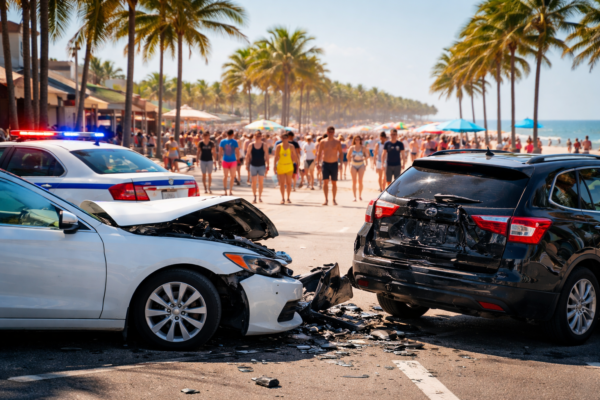
Florida follows a comparative negligence system, which means that the degree of fault for an accident can be distributed among the involved parties based on their actions. This system allows for shared responsibility, meaning that if you are partially at fault for the accident, you may still be able to recover damages, but your compensation will be reduced by the percentage of fault assigned to you.
For example, if a tourist is involved in an accident and it is determined that they were 20% responsible for the crash, they could still recover 80% of their damages from the other party, but would not be entitled to the full amount. This can be particularly important for tourists, as they may not fully understand local traffic laws, and may be more likely to make mistakes while driving in an unfamiliar area.

Michael Serrano
Founding Attorney

Molli Gard, ESQ.
Attorney
Liability of the Driver (Tourist)
In many cases, the tourist behind the wheel is the first person considered when determining liability. If a tourist is driving a rental car and causes an accident due to negligence—such as running a red light, failing to yield, or distracted driving—they can be held responsible for the damages. Florida law requires all drivers to carry personal injury protection (PIP) insurance, which covers medical expenses and lost wages regardless of fault. This coverage is usually part of the car’s registration and is provided by the driver’s insurance company or the rental agency if the driver is in a rental car.
However, when it comes to rental cars, the situation can become more complicated. Tourists often rent cars from companies that offer varying levels of insurance coverage. Many rental companies provide the option to purchase additional insurance or a damage waiver, which can significantly reduce or eliminate liability in the event of an accident. If the tourist opts not to purchase additional insurance, they may be personally liable for any damage to the vehicle or injuries sustained during the crash.
The Role of the Rental Car Company
Rental car companies are another important player in determining liability. While they may not be directly at fault for the accident, they could bear some responsibility in specific situations. For instance, if the rental car was defective or lacked proper maintenance, such as faulty brakes, worn-out tires, or malfunctioning airbags, the rental company may be held liable for damages.
Rental agencies also have specific policies when it comes to insurance. Tourists are often offered the option to purchase collision damage waivers (CDW), which can protect them from liability in the event of an accident. If a tourist declines this option, the rental company might still hold them accountable for certain damages, especially if the accident is deemed to be the driver’s fault. This is why it is crucial to understand the terms of the rental agreement and ensure that adequate insurance coverage is in place.

Mike Serrano’s law office was everything I needed after a very traumatic accident. He was always super up front and honest with me. I never got the feeling he was trying to sell me on something or to do something that I wasn’t comfortable with. He listened to my concerns and when it tough moments came that I needed to stand my ground. He backed me and made me feel 100% secure. He got me exactly what I needed in a settlement and I would never consider using anyone else. His office staff is also phenomenal.”
- Mary
Mike Serrano was a great attorney for my case!! He was very flexible with phone calls/ Zoom meetings. His staff are always friendly, whether it be on the phone or emails. They keep you updated during your entire case! They don’t leave you silent for months. if you call, they always call back with updates! Highly recommend!"
- Kylie Collier Border
I’ve never had to deal with a lawyer before but Mike has set the bar HIGH. He was always available to communicate my concerns and explain each step of the way. I know no other lawyer would have been able to achieve the same results because he jumped on an opportunity that was a little out of the ordinary and it paid off. He really fought for my case and over delivered. I really hope I never have another accident but if I do I’m running to Mike for help."
- Sandy Carter
Liability of Other Drivers Involved in the Accident
Florida’s comparative negligence law allows for multiple parties to be responsible for an accident. This means that other drivers involved in the crash could also share liability. For example, if a local driver failed to stop at a red light and collided with the rental car of a tourist, the local driver could be found liable for the damages.
When determining liability in multi-vehicle accidents, the actions of each driver are carefully examined. If another driver was speeding, driving under the influence, or engaging in reckless driving behavior, they may be held entirely or partially responsible for the crash. In such cases, the injured party (whether a tourist or a local resident) can file a claim with the at-fault driver’s insurance company to recover damages.
The Role of Road Conditions and Local Infrastructure
In some cases, the road conditions or infrastructure may play a role in the accident. Florida’s roads are often congested, and poor signage, construction zones, or lack of proper road maintenance can contribute to accidents. If an accident occurs due to unsafe road conditions, the responsible government agency or property owner could be held liable for damages.
For example, if an accident occurs in an area undergoing construction, and the construction company failed to provide proper warning signs or detours, they may be responsible for the incident. Similarly, if poor weather conditions like heavy rain or fog played a role in the crash, and there were no warnings or safety measures in place, the state or local government could be held accountable.
Related Videos
Choosing The Right Personal Injury Attorney
Personal Injury Settlement Timeline
The Impact of Insurance Coverage
Insurance plays a crucial role in determining liability after a car accident in Florida. Tourists involved in accidents may be covered by their personal insurance, their rental car’s insurance, or a combination of both. Understanding what is covered by each type of insurance can be confusing, so it is important to carefully review the terms of the rental agreement and the insurance policy.
In Florida, tourists who are involved in a car accident are often required to file a claim with the insurance company that covers the vehicle they were driving at the time of the crash. This may involve making a claim with their own personal insurance provider if they have rental car coverage, or with the rental company’s insurance if they purchased additional coverage.
What to Do If You’re Involved in a Car Accident as a Tourist
If you are a tourist involved in a car accident in Florida, it is important to take several key steps to protect yourself and ensure that your rights are upheld:
- Seek Medical Attention: Even if you don’t feel injured immediately, it’s important to see a doctor. Injuries like whiplash or concussions may not present symptoms right away, but they can worsen over time.
- Call the Police: Always report the accident to law enforcement, especially if there are injuries or significant property damage. The police report will serve as an official record of the incident and can be crucial when filing insurance claims or pursuing legal action.
- Gather Information: Exchange information with the other driver(s), including names, contact details, insurance information, and driver’s license numbers. Take photos of the accident scene, including the vehicles, damage, and any relevant road conditions.
- Notify the Rental Agency: If you were driving a rental car, notify the rental agency about the accident as soon as possible. They will provide guidance on the next steps and help you with the claims process.
- Contact a Personal Injury Attorney: If you’re unsure about your legal rights or if you face complications with your insurance claim, it is essential to speak with a personal injury attorney. At Serrano Law, we specialize in personal injury claims, including those involving tourists, and can help you navigate the complex legal and insurance systems.
Who Is Liable in Spring Break Car Accidents?
Determining liability in Florida car accidents involving tourists can be a complicated process, with various parties potentially sharing responsibility. Whether it’s the tourist driver, the rental company, another driver, or local authorities, understanding the nuances of Florida’s comparative negligence system is essential to securing fair compensation for your damages.
If you’ve been involved in a car accident in Florida, especially as a tourist during spring break, it’s crucial to have experienced legal representation on your side. Serrano Law is here to help guide you through the process and ensure that you get the compensation you deserve. Don’t hesitate to reach out for a free consultation to discuss your case.