
Florida summer storms can turn a normal drive into a dangerous situation within minutes, especially on busy roads in Hillsborough County, Tampa, Lutz, Wesley Chapel, and nearby communities. Serrano Law helps injured Floridians understand what can make rear-end accidents more common during heavy rain, sudden traffic slowdowns, slick pavement, and low visibility. These crashes often involve more than a simple fender impact because neck injuries, back injuries, concussions, vehicle repairs, missed work, and insurance disputes can follow a collision that happens in seconds. Florida law also makes fault, insurance coverage, medical documentation, and claim deadlines key issues after a weather-related crash.






Why Rear-End Accidents Rise During Florida Summer Storms 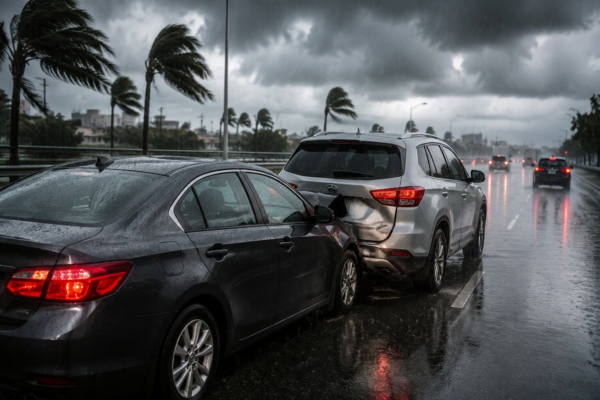
Summer storms in Florida often arrive quickly, and drivers may not have time to adjust before traffic patterns change. A road that was clear a few minutes earlier can become crowded, wet, and difficult to see across. In places such as Hillsborough County, where commuters, delivery vehicles, tourists, and local drivers share major roads, one sudden downpour can create a chain reaction. Brake lights appear ahead, drivers slow at different speeds, and the distance needed to stop safely becomes much longer than many people expect.
Rear-end accidents become more likely when drivers follow too closely for the conditions. On dry pavement, a driver may already be taking a risk by leaving too little space. On wet pavement, that risk grows because tires have less grip, brakes may not respond the same way, and water can prevent tires from maintaining steady contact with the road. The driver behind may believe there is enough time to stop, but the vehicle can slide forward and strike the car ahead before the driver can regain control.
Poor visibility adds another layer of danger. Heavy rain can blur lane markings, hide brake lights, and make it harder to judge how quickly traffic is slowing. Drivers may also face glare from headlights reflecting off wet roads, especially during late afternoon storms or darker storm clouds. When visibility drops, safe driving requires slower speeds and more following distance, but not every driver changes behavior quickly enough.
Founding Attorney Attorney Attorney
Michael Serrano

Candace “Cea” Hartley

Molli Gard, ESQ.
The Role of Sudden Traffic Slowdowns
Rear-end collisions often begin with a sudden slowdown rather than a dramatic loss of control. During Florida summer storms, traffic can slow for standing water, disabled vehicles, debris, flashing hazard lights, flooded intersections, or drivers who feel uncomfortable continuing at normal speed. One cautious driver may reduce speed safely, while another driver behind them may react late, brake hard, or swerve.
This becomes especially dangerous near exits, turn lanes, school zones, construction areas, and busy intersections. In stop-and-go traffic, even a small delay in reaction time can cause a crash. A driver who is looking at a phone, adjusting wipers, checking navigation, or watching the storm instead of the road may not see stopped traffic until it is too late. After a crash, these details matter because rain may explain road conditions, but it does not automatically excuse unsafe driving.
Drivers who have been injured in a crash during bad weather can find related guidance in the Florida car accident guide at https://mikeserranolaw.com/2020/10/02/florida-car-accident-guide/. That resource can help explain the larger claims process after a collision involving injuries, insurance issues, or disputed fault.
Mike Serrano’s law office was everything I needed after a very traumatic accident. He was always super up front and honest with me. I never got the feeling he was trying to sell me on something or to do something that I wasn’t comfortable with. He listened to my concerns and when it tough moments came that I needed to stand my ground. He backed me and made me feel 100% secure. He got me exactly what I needed in a settlement and I would never consider using anyone else. His office staff is also phenomenal.” - Mary Mike Serrano was a great attorney for my case!! He was very flexible with phone calls/ Zoom meetings. His staff are always friendly, whether it be on the phone or emails. They keep you updated during your entire case! They don’t leave you silent for months. if you call, they always call back with updates! Highly recommend!" - Kylie Collier Border I’ve never had to deal with a lawyer before but Mike has set the bar HIGH. He was always available to communicate my concerns and explain each step of the way. I know no other lawyer would have been able to achieve the same results because he jumped on an opportunity that was a little out of the ordinary and it paid off. He really fought for my case and over delivered. I really hope I never have another accident but if I do I’m running to Mike for help." - Sandy Carter
Wet Roads, Hydroplaning, and Braking Distance
Hydroplaning can occur when a layer of water separates a vehicle’s tires from the road surface. When that happens, the driver may lose steering control and braking power. Even without full hydroplaning, wet roads can make stopping distances longer, especially when tires are worn, brakes are poorly maintained, or the vehicle is traveling too fast for the conditions.
Rear-end accidents are common in this setting because the driver in back has the burden of reacting to what happens ahead. A front vehicle may stop because of a red light, traffic backup, pedestrian, stalled vehicle, or flooded lane. If the rear driver is following too closely or driving too fast, the extra stopping distance needed on wet pavement can be enough to cause impact.
Several factors can make wet-weather braking more dangerous:
- Tires with low tread that cannot move water away from the road surface
- Speed that is too high for rain, even if it is below the posted speed limit
- Heavy vehicles that need more space to stop safely
- Drivers who brake suddenly instead of slowing gradually
- Standing water near intersections, ramps, and low-lying road sections
A driver may tell an insurance company that the storm caused the crash, but the key question is usually whether that driver acted reasonably under the conditions. Florida drivers are expected to adjust to rain, traffic, and visibility. A summer storm may be part of the story, but it does not erase the need to drive with care.
Choosing The Right Personal Injury Attorney Personal Injury Settlement TimelineRelated Videos
Fault Issues After a Florida Rear-End Collision
Many people believe the rear driver is always at fault in a rear-end crash. In many cases, the rear driver is presumed responsible because drivers are expected to maintain a safe following distance and keep control of their vehicles. The facts still matter. A lead driver may share fault if they made an unsafe lane change, had broken brake lights, stopped suddenly without reason, or reversed unexpectedly.
Florida uses a comparative fault system in negligence cases, and the percentage of fault assigned to each party can affect the amount of compensation available. Florida Statutes section 768.81 addresses comparative fault in negligence cases, which can become relevant when both drivers blame each other for a crash.
Weather-related claims can become more complicated because insurance adjusters may argue that rain, traffic, or road conditions caused the crash rather than driver negligence. A careful investigation can help show whether the rear driver was speeding, tailgating, distracted, driving with worn tires, or failing to respond reasonably to visible hazards. Helpful evidence may include photographs, dash camera footage, vehicle damage patterns, witness statements, traffic camera footage, repair records, phone records, and medical documentation.
Common Injuries From Rear-End Accidents in Stormy Weather
Rear-end accidents are sometimes dismissed as minor, but the injuries can be serious. A sudden impact from behind can force the body forward and backward quickly, placing stress on the neck, spine, shoulders, and head. The force does not have to look severe from the outside for the person inside the vehicle to experience pain, limited movement, headaches, or symptoms that worsen over time.
Common injuries after rear-end collisions include whiplash, herniated discs, lower back injuries, shoulder injuries, wrist and hand injuries, concussions, knee injuries from impact with the dashboard, and soft tissue damage. Some people also experience anxiety about driving in the rain after a crash, especially when the collision happened suddenly and left them feeling unable to prevent it.
Medical care is one of the most important steps after a Florida rear-end accident. Symptoms can appear hours or days later, and waiting too long can make both recovery and the insurance claim more difficult. Florida’s personal injury protection system can also involve timing and documentation issues after a crash. Florida Statutes section 627.736 addresses personal injury protection benefits and related limits, which can affect how medical bills are handled after a motor vehicle accident.
What To Do After a Rear-End Accident During a Storm
The moments after a crash can feel overwhelming, especially when rain is still falling and traffic continues moving nearby. Safety should come first. Move out of traffic if the vehicles can be moved safely, turn on hazard lights, and call 911 if anyone is hurt or if the crash is blocking traffic. A police report can be helpful when insurance companies later review what happened.
Photos and videos can be valuable when conditions change quickly. A storm may pass before an adjuster ever reviews the claim, so it helps to document standing water, rain intensity, vehicle positions, damage, skid marks, road debris, traffic signals, and visible injuries. The same applies to the surrounding area. A flooded lane, missing sign, blocked view, or poorly marked construction zone may be relevant to the crash.
Drivers should exchange information, gather witness names when possible, and avoid arguing about fault at the scene. It is also wise to avoid giving recorded statements to an insurance company before understanding the claim. Insurance adjusters may ask questions that seem routine, but a casual statement about feeling fine, being in a hurry, or not seeing the other vehicle can later be used against the injured person.
For related information about fault and injury claims, see the discussion of liability in a personal injury claim at https://mikeserranolaw.com/2021/02/08/liability-in-a-personal-injury-claim/. Drivers dealing with broader injury questions can also review the Florida personal injury guide at https://mikeserranolaw.com/2020/10/02/florida-personal-injury-guide/.
How Insurance Companies May Treat Storm-Related Rear-End Claims
Insurance companies often look for reasons to reduce what they pay. In summer storm cases, an adjuster may argue that the injured driver stopped too suddenly, that poor weather was unavoidable, that vehicle damage was too minor to cause injury, or that medical treatment was unrelated to the crash. These arguments can be frustrating for someone who did nothing more than stop for traffic and then get hit from behind.
A strong claim usually connects the facts in a clear way. It should show how the crash happened, why the other driver failed to use reasonable care, what injuries resulted, what treatment was needed, how the injuries affected daily life, and what financial losses followed. Medical records, work records, photographs, and consistent treatment notes can help support the claim.
Damages may include emergency care, follow-up treatment, physical therapy, imaging, medication, lost wages, reduced earning ability, vehicle damage, out-of-pocket costs, pain, suffering, and loss of normal activities. The value of a claim depends on the facts, the injuries, available insurance, and the proof gathered.
Why Local Knowledge Matters in Florida Storm Crash Cases
Florida weather patterns are familiar to local drivers, and that matters. A person driving in Hillsborough County during summer should know that sudden rain, slick intersections, and traffic backups are common. Local experience can help an attorney evaluate whether a driver failed to adjust to conditions that should have been expected.
Local knowledge can also help when reviewing crash locations. Roads near shopping areas, school routes, commuter corridors, and construction zones may have repeated patterns of congestion during storms. A rear-end crash near a known bottleneck may require a different investigation than a crash on a rural road. The goal is not to make assumptions. The goal is to understand the full picture before an insurance company narrows the claim to its preferred version of events.
For people injured in crashes involving larger vehicles or commercial traffic, related guidance is available at https://mikeserranolaw.com/2020/11/30/4-truck-accident-questions/. Truck and commercial vehicle crashes can involve added issues such as company policies, vehicle maintenance, driver logs, and higher insurance limits.
How Serrano Law Helps Injured Drivers
Serrano Law represents injured people who need clear guidance after a Florida crash. The firm can review the accident facts, identify available insurance coverage, gather evidence, communicate with insurers, evaluate medical documentation, and help clients understand their options. The goal is to protect the client from being pressured into a rushed decision before the full impact of the injuries is known.
A rear-end accident during a Florida summer storm may seem straightforward at first, but fault disputes, delayed symptoms, medical bills, and insurance tactics can make the process harder than expected. Legal guidance can be especially helpful when the injured person is receiving treatment, missing work, or unsure whether the insurance company is treating the claim fairly.
Deadlines also matter. Florida Statutes section 95.11 sets limitation periods for civil actions, and injury victims should speak with an attorney as soon as possible to avoid missing a deadline that may apply to their situation.
Practical Ways Drivers Can Reduce Rear-End Crash Risks During Storms
No one can control Florida weather, but drivers can reduce risk by changing how they drive when summer storms hit. Slowing down is the first step because posted speed limits are designed for normal conditions, not heavy rain and low visibility. A safe speed during a downpour may be far below the posted limit.
Drivers should increase following distance, turn on headlights, avoid sudden braking, keep both hands on the wheel, replace worn tires, maintain windshield wipers, and avoid distractions. It is also safer to pull over in a safe location when visibility becomes too poor to continue. Stopping in a travel lane or under an overpass can create new hazards, so drivers should choose a safe area away from moving traffic when possible.
Speak With a Florida Car Accident Lawyer
If you were injured in a rear-end accident during a Florida summer storm, Serrano Law can help you understand your rights, deal with insurance issues, and pursue compensation based on the facts of your case. Contact the firm to request a free consultation and speak with a Florida car accident lawyer about your next steps.
This article is for informational purposes only and is not legal advice. Consult an attorney about your specific situation.