
Strong Florida car accident evidence often includes scene photos and video, witness information, a crash report, medical records, proof of lost income, repair records, and digital or electronic data that helps explain what happened. After a summer crash, some evidence can disappear quickly because vehicles are repaired, visitors leave town, businesses overwrite camera footage, and roadway conditions change.
If you were hurt in Tampa, Lutz, Wesley Chapel, or another nearby Florida community, your first priority should be safety and medical care. After immediate needs are addressed, organized documentation can help show how the crash happened, connect your injuries to the collision, and explain the financial and daily effects of the accident.
Serrano Law helps injured people in Hillsborough County and nearby Florida communities evaluate which evidence may matter and what steps may help preserve it without making assumptions about fault or case value.




Why Evidence Matters in a Florida Car Accident Case 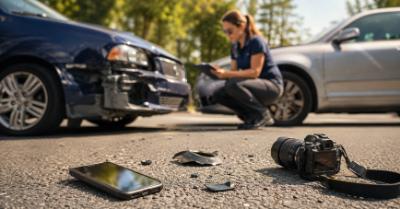
A car accident claim is built on facts. Insurance companies may question who caused the crash, whether an injury came from the collision, how serious the injury is, or whether a claimed expense is related to the accident. Evidence helps answer those questions with records rather than memory alone.
Florida’s comparative fault law can affect recovery when more than one person shares responsibility. Under Florida Statutes section 768.81, damages can be reduced according to the percentage of fault assigned. In negligence actions covered by the statute, a person found more than 50 percent at fault for his or her own harm may not recover damages.
For a broader explanation of Florida car accident claims, visit:
https://mikeserranolaw.com/2020/10/02/florida-car-accident-guide/
Founding Attorney Attorney
Michael Serrano

Molli Gard, ESQ.
Photos and Video From the Crash Scene
Photographs can preserve details that may look different only hours later. If you can safely take pictures, capture close views and wide views rather than focusing only on the largest area of damage.
Useful images may include:
- Damage to every vehicle involved
- Final resting positions of the vehicles
- Skid marks, debris, broken glass, or roadway fluid
- Traffic lights, stop signs, lane markings, and construction signs
- Visible injuries
- Rain, standing water, glare, or other conditions present at the time
- Nearby businesses, homes, or intersections with cameras
Summer conditions can change quickly. A roadway that was wet at the time of impact may be dry later. Construction crews may move cones or reopen a lane. A rental vehicle may be returned or repaired. Photos taken near the time of the crash can preserve those temporary details.
Save original dash camera footage and create a backup rather than editing the only copy.
Independent Witness Information
A neutral witness may help when drivers remember the collision differently. If someone saw the crash, ask for the person’s name, phone number, and email address. A short note about where the witness was standing or driving can also help.
Do not pressure a witness to agree with your version. The goal is to preserve contact information so the witness can describe what he or she observed.
Witness information can be especially time-sensitive during summer travel. A visitor who saw a Tampa collision may leave Florida the next day, which can make that person harder to locate later.
Mike Serrano’s law office was everything I needed after a very traumatic accident. He was always super up front and honest with me. I never got the feeling he was trying to sell me on something or to do something that I wasn’t comfortable with. He listened to my concerns and when it tough moments came that I needed to stand my ground. He backed me and made me feel 100% secure. He got me exactly what I needed in a settlement and I would never consider using anyone else. His office staff is also phenomenal.” - Mary Mike Serrano was a great attorney for my case!! He was very flexible with phone calls/ Zoom meetings. His staff are always friendly, whether it be on the phone or emails. They keep you updated during your entire case! They don’t leave you silent for months. if you call, they always call back with updates! Highly recommend!" - Kylie Collier Border I’ve never had to deal with a lawyer before but Mike has set the bar HIGH. He was always available to communicate my concerns and explain each step of the way. I know no other lawyer would have been able to achieve the same results because he jumped on an opportunity that was a little out of the ordinary and it paid off. He really fought for my case and over delivered. I really hope I never have another accident but if I do I’m running to Mike for help." - Sandy Carter
The Florida Traffic Crash Report
A law enforcement crash report can provide a useful starting record. It may identify drivers, vehicles, witnesses, insurance information, the responding agency, and observations made at the scene. A crash report does not automatically decide civil liability, so it should be reviewed with the other available evidence.
The Florida Department of Highway Safety and Motor Vehicles is the state’s official repository for crash records. Reports may take up to 10 days to become available through the Florida Crash Portal.
Keep the report number and responding officer’s information if they are available.
For information focused on Hillsborough County car accident claims, visit:
https://mikeserranolaw.com/hillsborough-county-car-accident-lawyers/
Medical Records That Connect the Crash to Your Injuries
Medical records can document when symptoms began, what providers observed, what testing was ordered, diagnoses, restrictions, medications, referrals, and whether symptoms improved or continued.
Florida Personal Injury Protection coverage also has a timing rule. Under Florida Statutes section 627.736, initial medical services and care generally must be received within 14 days after a motor vehicle accident for PIP medical benefits to apply.
Medical decisions should be based on your health needs. The insurance deadline is still a factor to know when organizing a claim.
Keep records such as:
- Emergency care records
- Specialist visits
- Therapy records
- Prescriptions
- Imaging reports
- Medical bills
- Written work or activity restrictions
Choosing The Right Personal Injury Attorney Personal Injury Settlement TimelineRelated Videos
Proof of Lost Income and Out-of-Pocket Costs
If injuries caused you to miss work or reduced your ability to perform your job, records can help show the financial effect. Useful proof may include:
- Pay stubs
- Employer letters
- Missed-shift records
- Disability notes
- Invoices or business records for self-employed workers
- Records of used sick or vacation time
Keep receipts for prescriptions, medical equipment, transportation to appointments, towing, rental costs, and other accident-related expenses.
For more context on recoverable losses, visit:
https://mikeserranolaw.com/2021/02/01/car-accident-case-damages/
Case Results
Surveillance Footage and Digital Records
Some useful evidence may belong to someone else. Gas stations, restaurants, apartment complexes, hotels, retail stores, parking facilities, and homes near a crash may have cameras pointed toward the road. That footage may be overwritten under normal retention practices, so identifying camera locations early can matter.
Other digital evidence may include:
- Dash camera recordings
- Rideshare trip records
- Navigation history
- Photos with original time and location metadata
- Vehicle event data
- Relevant phone records obtained through lawful procedures
- Toll, parking, or rental records that help establish a timeline
Do not try to access another person’s private accounts or devices. An attorney can evaluate whether preservation requests, subpoenas, or discovery procedures are appropriate.
Vehicle Damage, Repair Records, and Electronic Data
The damaged vehicles can also serve as evidence. Crush patterns, airbag deployment, tire condition, broken components, and repair estimates may help explain the direction and force of impact. Some vehicles may store electronic data related to speed, braking, throttle position, or seat belt use, depending on the vehicle and circumstances.
If a vehicle is likely to be repaired, sold, or sent to salvage, take clear photographs first and keep towing, storage, repair, and total-loss documents. In a serious or disputed crash, a lawyer may need to evaluate whether the vehicle should be inspected before its condition changes.
A Consistent Record of Daily Effects
Not every consequence appears on an invoice. An injury may affect sleep, childcare, driving, exercise, household chores, or the ability to sit or stand for long periods.
A factual journal can help you remember dates and limitations. Record medical appointments, symptoms, missed work, activities you could not complete, and assistance you needed. Keep the entries accurate and specific.
Use care with social media. A single photo rarely explains a person’s full medical condition, but an insurer may review public posts and use them when evaluating a claim.
What Evidence Should You Prioritize After a Summer Crash?
Start with evidence that is most likely to disappear:
- Photos and video from the scene
- Witness names and contact information
- Nearby camera locations
- Dash camera files
- Rental, rideshare, or travel records
- The location and condition of the damaged vehicle
- Medical evaluation and treatment records
Then create one secure place for crash-related documents. Keep copies of insurance letters and note the date, time, and basic subject of significant calls.
Preservation Note
Evidence can disappear much sooner than a filing deadline. Save original files and document camera locations, witnesses, and vehicle condition as soon as you can do so safely.
Florida negligence actions are generally subject to a two-year limitations period under section 95.11, but different claims can have different deadlines, notice requirements, or exceptions. The filing deadline should not be treated as a reason to delay evidence preservation.
How a Florida Car Accident Lawyer Can Help Preserve Evidence
A lawyer can look beyond the documents already in your hands. Depending on the facts, legal work may include:
- Requesting preservation of video footage
- Obtaining public records
- Contacting witnesses
- Reviewing insurance policies
- Inspecting vehicles
- Gathering medical records
- Documenting wage loss
- Evaluating whether expert analysis is needed
The goal is to identify reliable evidence, preserve it before it is lost, and organize it into a clear account of responsibility, injuries, and losses.
If you want to learn about factors that may affect claim value, visit:
https://mikeserranolaw.com/car-accident-case-value/
Speak With Serrano Law After a Florida Summer Car Accident
If you were injured in a summer crash in Hillsborough County or a nearby Florida community, Serrano Law can review the circumstances, explain the evidence and insurance issues that may apply, and discuss practical next steps.
Call Serrano Law at (813) 553-5648 or visit:
https://mikeserranolaw.com/contact/
Serrano Law serves injured people in Hillsborough County, including Tampa, Lutz, Wesley Chapel, and nearby Florida communities.
This article is for informational purposes only and is not legal advice. Consult an attorney about your specific situation.