
Springtime in Florida brings with it the promise of warm weather and blooming landscapes, but it also brings some of the most hazardous driving conditions of the year. Serrano Law emphasizes the importance of understanding how wet-weather driving affects both accident risk and liability. Sudden downpours, heavy showers, and lingering puddles can drastically reduce traction, impair visibility, and create conditions where even cautious drivers are at risk. Hydroplaning, skidding, and sudden stops become common occurrences, and determining fault in these situations can be complex. Drivers often assume that a car accident in the rain is unavoidable, but Florida’s legal framework still holds drivers accountable for negligence or unsafe behavior, even in inclement weather.






Rainy Conditions and Common Hazards 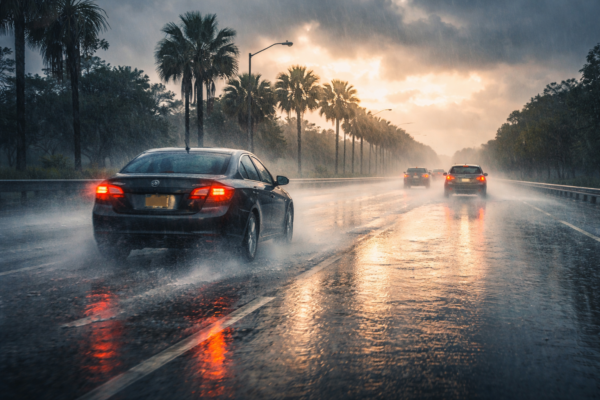
Florida’s roads are particularly vulnerable during spring rains due to the combination of high traffic volumes and sudden weather changes. Heavy rainfall creates standing water in low-lying areas and near intersections, while vehicles driving through puddles can splash water onto windshields and mirrors, further limiting visibility. In addition, wet roads reduce tire traction, making braking less effective and increasing stopping distances. This can result in rear-end collisions, multi-car pileups, and collisions on curves or highway exits where drivers fail to adjust speed appropriately. Drivers may also underestimate the danger of hydroplaning, which occurs when a layer of water builds between the tires and the road, causing a loss of steering and braking control. Even minor miscalculations, such as accelerating too quickly or changing lanes abruptly, can escalate into serious accidents under these conditions.
Florida’s Comparative Fault System
Florida operates under a pure comparative negligence system, which means that multiple drivers can share responsibility for an accident, regardless of the degree of fault. If one driver is found 30% responsible for a collision and the other driver 70%, each party’s compensation is reduced in proportion to their assigned fault. When it comes to accidents on rainy roads, factors such as driving speed relative to weather conditions, the distance maintained from other vehicles, the functionality of tires and brakes, and whether headlights were used properly all play a role in determining liability. In wet conditions, even slight deviations from reasonable care, such as distracted driving or failing to signal, can shift fault percentages. For instance, a driver who fails to slow down during a sudden rainstorm and collides with a vehicle that had stopped safely may bear a larger share of the liability, even though environmental conditions contributed to the accident.
Founding Attorney Attorney Attorney
Michael Serrano

Candace “Cea” Hartley

Molli Gard, ESQ.
Investigating Wet-Weather Crashes
Proper investigation is critical to establishing fault and protecting your rights after a rainy-road accident. This includes reviewing police reports, gathering witness statements, documenting tire marks or skid patterns, and photographing the roadway, vehicles, and surrounding conditions. Weather reports and traffic camera footage can also help reconstruct the sequence of events. Experienced attorneys, like those at Serrano Law, understand how to evaluate these factors and identify evidence that might be overlooked by insurance adjusters. Investigators will often examine whether the driver attempted to reduce speed, maintained a safe following distance, and operated their vehicle responsibly given the weather. In complex multi-vehicle crashes, these investigations can determine how fault is divided among all parties involved.
Insurance Considerations in Rain-Related Accidents
Drivers in Florida are required to carry Personal Injury Protection (PIP) coverage as well as property damage liability insurance. PIP insurance covers medical expenses regardless of fault, providing immediate financial support for injuries sustained in an accident. Liability insurance compensates other parties for vehicle damage or medical expenses resulting from your actions. In the event of an accident on a rainy road, insurers will consider how comparative fault rules apply, potentially reducing your recovery if you are partially responsible. Understanding the nuances of these policies is vital, particularly when multiple vehicles are involved or when environmental factors contribute to the crash. Legal guidance can help ensure that insurance companies correctly calculate fault and that your claim reflects the full extent of damages incurred.
Mike Serrano’s law office was everything I needed after a very traumatic accident. He was always super up front and honest with me. I never got the feeling he was trying to sell me on something or to do something that I wasn’t comfortable with. He listened to my concerns and when it tough moments came that I needed to stand my ground. He backed me and made me feel 100% secure. He got me exactly what I needed in a settlement and I would never consider using anyone else. His office staff is also phenomenal.” - Mary Mike Serrano was a great attorney for my case!! He was very flexible with phone calls/ Zoom meetings. His staff are always friendly, whether it be on the phone or emails. They keep you updated during your entire case! They don’t leave you silent for months. if you call, they always call back with updates! Highly recommend!" - Kylie Collier Border I’ve never had to deal with a lawyer before but Mike has set the bar HIGH. He was always available to communicate my concerns and explain each step of the way. I know no other lawyer would have been able to achieve the same results because he jumped on an opportunity that was a little out of the ordinary and it paid off. He really fought for my case and over delivered. I really hope I never have another accident but if I do I’m running to Mike for help." - Sandy Carter
Steps to Take After a Rainy-Road Collision
Following a wet-weather accident, there are several essential steps that drivers should take to protect their rights and maximize potential recovery. First, document the scene thoroughly by taking photographs of vehicles, skid marks, and any standing water that may have contributed to the accident. Next, seek immediate medical attention, even if injuries appear minor, as delayed symptoms may arise from whiplash or other impact-related trauma. Notify local authorities and your insurance provider promptly to create an official record of the incident. Contacting a skilled attorney, such as those at Serrano Law, early in the process ensures that evidence is preserved and that liability is assessed accurately. Keep all receipts, medical records, and repair estimates, and gather witness statements when possible. Taking these steps provides a strong foundation for fair insurance settlements or court proceedings.
Case Scenarios Illustrating Fault
Consider a driver traveling above the speed limit who hydroplanes and collides with a vehicle stopped at a red light. In this scenario, the speeding driver is typically deemed primarily at fault, even though the wet road contributed to the loss of control. In another instance, a car may rear-end a slower-moving vehicle during a heavy rainstorm. While the rear driver might argue that visibility was poor, Florida law generally holds them liable for maintaining a safe following distance. Multi-car pileups on highways during spring rains further complicate fault assignment. Each driver’s behavior, the specific conditions at the accident site, and the timing of braking or evasive maneuvers are scrutinized to determine comparative negligence percentages.
Choosing The Right Personal Injury Attorney Personal Injury Settlement TimelineRelated Videos
How Attorneys Assist in Wet-Weather Crashes
An experienced personal injury attorney provides crucial support in rainy-road accident cases. Attorneys investigate accident scenes, gather relevant documentation, consult with accident reconstruction specialists, and communicate with insurance adjusters on your behalf. They can assess whether fault has been appropriately assigned and negotiate for full compensation for damages and medical expenses. In cases where liability is disputed or contested by insurers, attorneys are prepared to represent clients in court to ensure a fair resolution. Leveraging their knowledge of Florida law, attorneys can interpret comparative fault rules and present evidence showing how environmental factors, traffic conditions, and other drivers’ actions contributed to the accident.
Preventing Accidents During Rainy Spring Conditions
While accidents cannot always be prevented, drivers can take proactive steps to reduce risk during Florida’s rainy season. Slowing down significantly, increasing following distances, and maintaining proper tire tread depth are essential precautions. Using headlights in heavy rain or fog improves visibility, while avoiding sudden steering or braking maneuvers minimizes the chance of hydroplaning. Drivers should also remain alert to water accumulation in low-lying areas and intersections, as sudden braking may be required. These safety practices not only reduce the likelihood of accidents but can also influence fault determination if a collision occurs.
Rainy spring roads present a unique set of challenges for Florida drivers. Understanding how wet conditions influence fault and liability under Florida’s comparative negligence rules is critical for protecting your rights after a collision. Documenting evidence, consulting with an experienced attorney like those at Serrano Law, and taking proactive safety measures are all essential steps for navigating the aftermath of a wet-weather crash. By taking these precautions and understanding the legal landscape, drivers can safeguard themselves and ensure fair compensation when accidents occur.
This information is for general guidance only and does not constitute legal advice. Consult a qualified attorney regarding your specific circumstances.